At a glance
Melasma treatment in Gangnam at a glance
- The best melasma treatment in Gangnam is the one matched to your pigment type and skin, and this page sets out 5 Gangnam clinics with the facts each card shows so you can weigh them side by side.
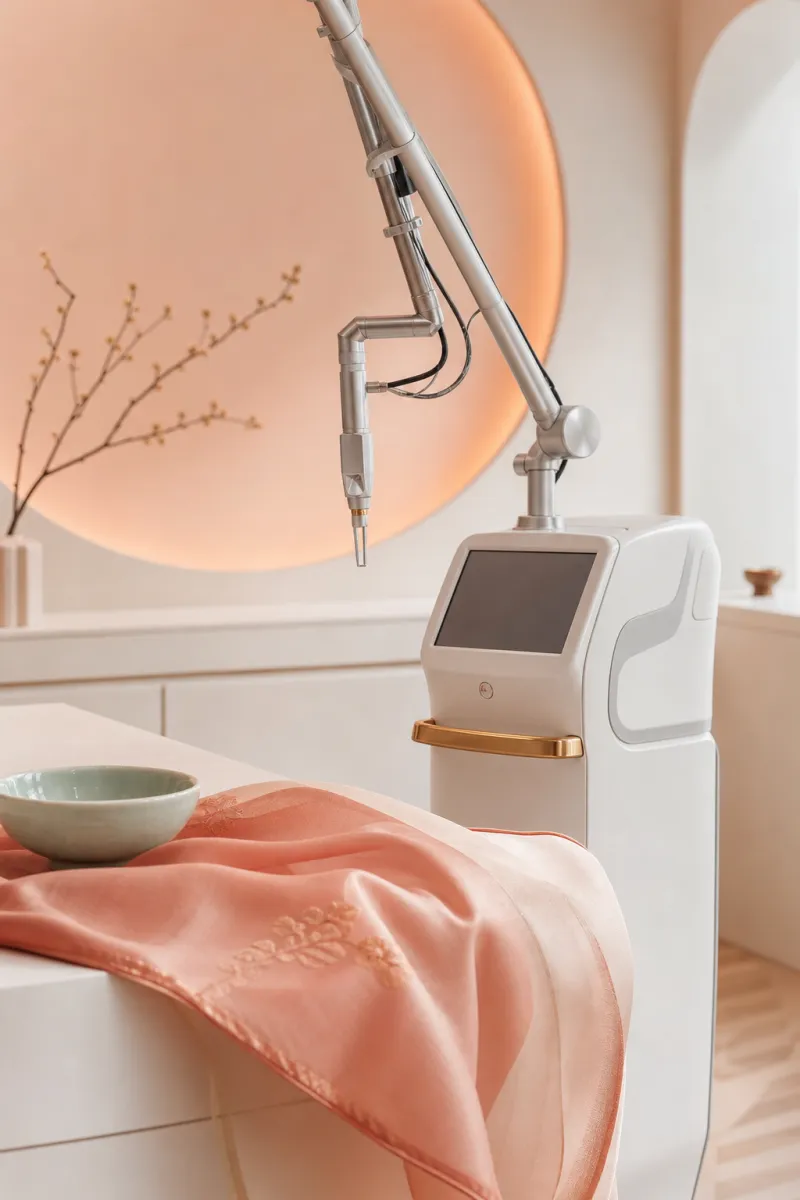
- Most clinics in the district treat melasma with laser toning: a 1064 nm Nd:YAG laser, Q-switched or picosecond, passed gently across the face at low energy over a course of visits.
- Toning is charged per session or as a multi-session course, and listed prices are before VAT, with 10% VAT added at payment.
- The one check that matters most is a written plan for relapse: sun protection, home care and maintenance spacing agreed before the first pulse.
Basics
What is Melasma treatment?
Melasma is a long-lasting pattern of brown or grey-brown patches on the cheeks, forehead, upper lip or jawline. Sunlight, hormones and heat push it darker, so it often flares in summer. It is managed over time rather than cured once.
Laser toning is the standard approach in Korean clinics. The doctor sets a 1064 nm Nd:YAG laser to a low energy per pulse with a wide spot, then makes several even passes over the face. The aim is to break pigment down in small steps without the heat injury that can make melasma rebound. Laser time is roughly 10 to 20 minutes, numbing is usually not needed, and redness tends to fade within hours to a few days.
The research is encouraging but modest. A 2022 meta-analysis by Chen and colleagues in the Journal of Cosmetic Dermatology pooled 12 studies with 358 patients. Low-fluence Q-switched toning on its own gave results similar to medication, while toning combined with medication lowered severity scores more than toning alone. Medication itself is a matter for your own doctor; the laser side is where settings and spacing are chosen for the individual patient.
Clinics in Gangnam
5 clinics for Melasma treatment in Gangnam
Every clinic below lists Melasma treatment among its treatments. Message a clinic directly.

1. RE:BERRY Clinic Gangnam
3. Aive Clinic
4. Tones Clinic Gangnam
5. ENTER Plastic Surgery
Why Korea
Why people choose Korea for Melasma treatment
Low-energy 1064 nm toning has been part of everyday practice in Korean clinics for many years, so doctors work with these settings on Asian and mixed skin types routinely.
A session leaves little visible downtime, so it fits between sightseeing or meetings, and flying home on the same day is generally possible.
Many Gangnam clinics see international visitors every week and hand out written aftercare, which matters because home care largely decides how long the result lasts.
Per-session and course prices are usually displayed openly, which makes like-for-like comparison simpler than with bundled skin programs.
Who it suits
Who Melasma treatment suits
- Good fit: epidermal or mixed melasma on the cheeks or forehead that has not cleared with sunscreen alone.
- Good fit: visitors who can complete a course over several weeks, or plan return trips, and keep strict sun protection afterwards.
- Not a good fit: pregnancy or breastfeeding, an active rash, eczema or infection on the face, or a fresh tan.
- Not a good fit: anyone expecting a single visit to clear melasma for good, since patches often return and maintenance is part of the plan.
- Not a good fit: spots that change quickly, bleed or look irregular, which need a medical diagnosis before any cosmetic laser.
Selection criteria
How we chose these clinics
- Diagnosis: ask how the patches are assessed, for example with a skin analyzer or Wood's lamp, and whether melasma is told apart from sun spots, freckles or deeper pigment such as Hori's nevus, which call for different settings.
- Laser named and explained: ask which 1064 nm device will be used, Q-switched or picosecond, and why the chosen energy level suits your skin tone.
- Course plan in writing: a sound plan states the number of sessions, the gap between them and the point at which progress is reviewed, instead of an open-ended bundle.
- Safety limits: the clinic should explain the risk of white dots or rebound darkening when sessions are too close or too strong, and how settings change if either appears.
- Combined care: check how toning is timed with peels, light treatment or skin boosters, and whether the plan changes after questions about your health and current medicines.
- Who holds the handpiece: confirm whether the doctor or a nurse performs the passes, and who reviews your skin at follow-up visits.
- Clear pricing: compare per-session and course prices before VAT, remember that 10% VAT is added at payment, and see whether soothing care or sunscreen is included.
Evidence
Research behind this page
- Efficacy of low‐fluence 1064 nm Q‐switched Nd: YAG laser for the treatment of melasma: A meta‐analysis and systematic reviewJournal of Cosmetic Dermatology · 2022 · doi:10.1111/jocd.15126
A meta-analysis of 12 studies with 358 patients found low-fluence Q-switched toning similar to medication alone, with greater improvement when the two were combined.
- Low‐fluence Q‐switched Nd: YAG 1064‐nm laser and intense pulsed light for the treatment of melasmaJournal of the European Academy of Dermatology and Venereology · 2014 · doi:10.1111/jdv.12854
A split-face study in 20 women showed faster lightening when intense pulsed light was added to toning, while recurrence occurred on both sides.
FAQ
Questions about Melasma treatment in Gangnam
How many toning visits fit into a one-week stay in Gangnam?
Most visitors fit one or two toning visits into a week, which starts the process but rarely completes it. Clinics usually space sessions one to two weeks apart so the skin can settle between passes. Treating more often to save time can raise the risk of white dots or rebound darkening. If you can only come once, ask the clinic which parts of the plan, such as sunscreen and gentle skincare, you can continue at home.
What should a clinic card tell me about the laser it uses?
A useful card or consultation names the device, its wavelength and whether it is Q-switched or picosecond. Both types are used for melasma at low energy in Gangnam. The name lets you compare like with like across clinics and check the same device at a later visit. Also ask whether the handpiece or settings are changed for darker patches, since this shows the doctor is adjusting the plan to your skin rather than running a fixed program.
Does adding intense pulsed light to toning help melasma clear?
Adding intense pulsed light can speed up clearing in some patients, but patches can still come back. In a 2014 split-face study in the Journal of the European Academy of Dermatology and Venereology, Vachiramon and colleagues treated 20 women and found 55 percent lightness improvement on the combined side against 37 percent with toning alone. Recurrence was seen on both sides. Ask whether light treatment suits your pigment depth before adding it.
Is low-energy laser suitable for darker or tanned skin?
Low-energy 1064 nm toning is commonly used on medium and deeper skin tones because this wavelength is absorbed less by the surface layer. The trade-off is that darker skin reacts more strongly to heat, so the doctor normally starts at a cautious level and reviews the response. A recent tan raises the risk of irritation, so arrive with your natural skin color. Tell the clinic about any past laser reactions or dark marks after spots.
What sun protection is needed after a toning session?
Daily broad-spectrum sunscreen and physical shade are needed from the day of the session onward, because sun exposure is the main driver of melasma darkening again. Tinted sunscreens containing iron oxides also block part of visible light, which affects pigment. Reapply every two to three hours outdoors and wear a hat in strong sun. Many clinics include written sun-care advice with aftercare, so ask for it in your language.
Do Gangnam clinics explain aftercare in English?
Many Gangnam clinics that treat international visitors give aftercare in English and sometimes in other languages, either in writing or through an interpreter. Check this before booking, because instructions on cleansing, sunscreen and moisturizer matter for weeks after you leave. Ask for the device name and settings to be written down. That record helps a doctor at home continue the plan safely.
Summary
Final thoughts
The right choice depends on your profile. A first-timer is usually well served by a short series at conservative settings with a clear review point. A visitor on a short trip should focus on one or two well-spaced sessions plus home care that continues after the flight. Someone combining treatments should ask how toning is timed with peels, light treatment or skin boosters.
On budget, the lowest per-session figure is not the whole picture: a course with review visits and written aftercare can be more useful than single sessions. Compare the cards on this page by device, plan and inclusions, and choose the clinic whose approach fits your goals and timeline.